Key Takeaways
• Anxiety attacks and panic attacks are often confused but have different causes and symptom patterns.
• Anxiety attacks usually build gradually, while panic attacks occur suddenly and intensely.
• Panic attacks often include severe physical symptoms like chest pain and shortness of breath.
• Anxiety attacks are typically linked to stress or triggers, while panic attacks may occur unexpectedly.
• Understanding the difference helps in choosing the right treatment approach.
• Both conditions are treatable with proper medical and behavioral care.
Book an Appointment(opens in a new tab)
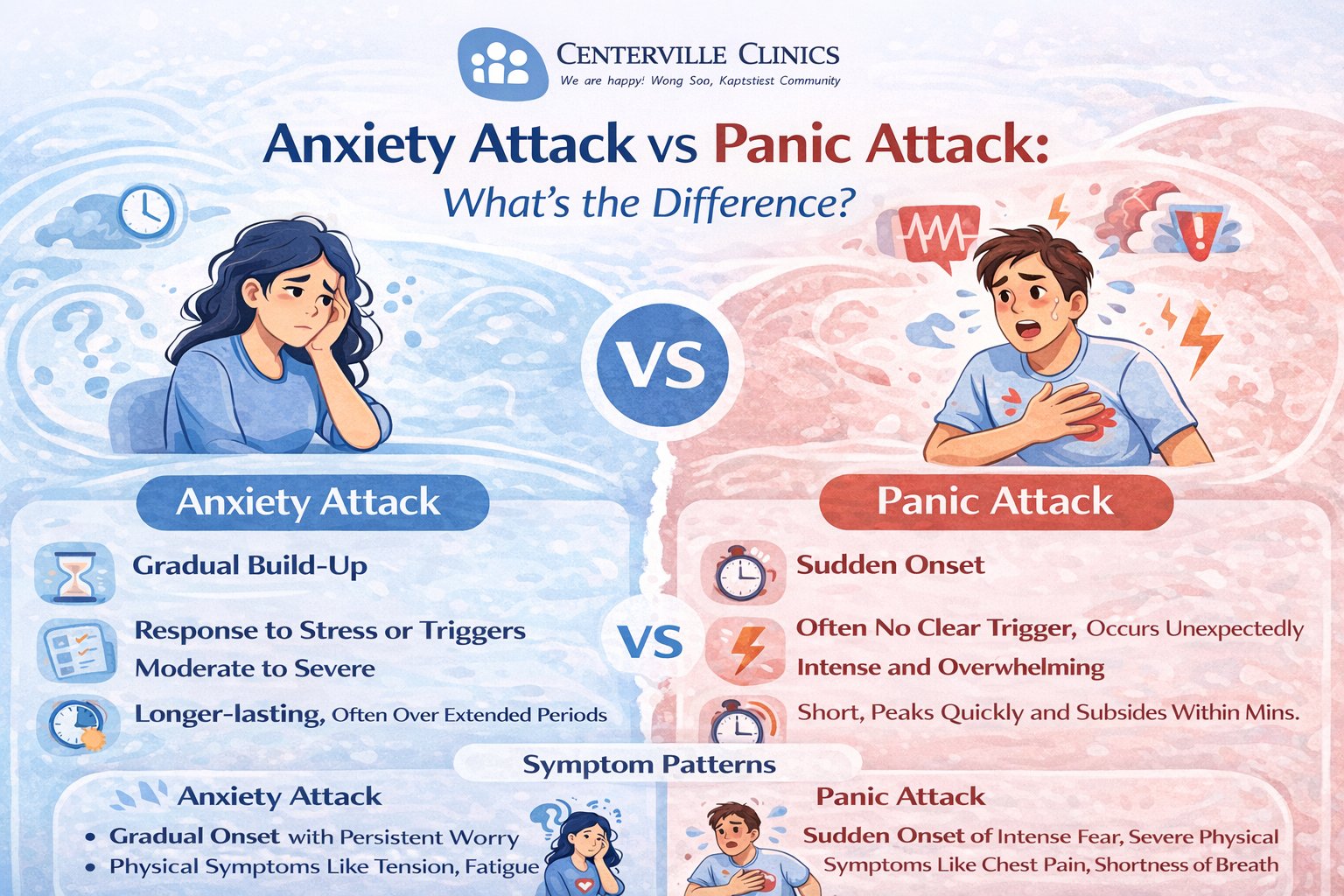
Understanding Anxiety Attacks and Panic Attacks
Anxiety(opens in a new tab) can manifest in different ways, and two commonly confused experiences are anxiety attacks and panic attacks. While they share some similarities, they are not the same.
Understanding the differences between these two can help individuals better recognize their symptoms and seek appropriate care.
What Is an Anxiety Attack?
An anxiety attack is not a formal medical diagnosis but is commonly used to describe periods of intense anxiety that build up over time.
Characteristics of Anxiety Attacks
gradual onset
linked to stress or triggers
persistent worry
manageable but distressing symptoms
These episodes often occur in response to situations such as work stress, social pressure, or personal concerns.
What Is a Panic Attack?
A panic attack is a sudden and intense episode of fear that triggers severe physical reactions, often without warning.
Characteristics of Panic Attacks
sudden onset
intense fear or sense of danger
peaks within minutes
may occur without a clear trigger
Panic attacks can feel overwhelming and may lead individuals to believe they are experiencing a serious medical emergency.
Key Differences Between Anxiety and Panic Attacks
Onset
anxiety attack builds gradually
panic attack occurs suddenly
Intensity
anxiety attack is moderate to severe
panic attack is intense and overwhelming
Triggers
anxiety attacks are usually trigger-based
panic attacks may occur unexpectedly
Duration
anxiety attacks may last longer
panic attacks peak quickly and then subside
Symptoms of Anxiety Attacks
Anxiety attacks typically include both emotional and physical symptoms.
excessive worry
restlessness
muscle tension
difficulty concentrating
sleep disturbances
These symptoms are often similar to those described in what anxiety feels like(opens in a new tab).
Symptoms of Panic Attacks
Panic attacks involve more intense physical symptoms that can feel alarming.
rapid heartbeat
shortness of breath
chest pain
dizziness
feeling out of control
These symptoms are closely related to the body’s fight-or-flight response explained in physical anxiety responses(opens in a new tab).
Why Do Panic Attacks Feel So Intense?
Panic attacks activate the body’s emergency response system even when there is no real danger.
This causes a surge of adrenaline, leading to intense physical sensations such as rapid heartbeat and difficulty breathing.
For individuals who frequently experience these episodes, it can create a cycle of fear and anticipation.
How to Manage Anxiety and Panic Attacks
Both anxiety and panic attacks can be managed with appropriate strategies.
Immediate Techniques
deep breathing exercises
grounding techniques
focusing on surroundings
reducing stimulation
Many individuals benefit from learning how to calm anxiety quickly(opens in a new tab).
Treatment Options
Long-term management often involves structured treatment.
therapy such as CBT
medication when needed
lifestyle adjustments
stress management techniques
Explore treatment options for anxiety(opens in a new tab) and professional behavioral health services(opens in a new tab).
When to Seek Medical Help
You should consider seeking care if:
panic attacks occur frequently
symptoms feel severe or worsening
daily life is affected
you feel unable to manage symptoms alone
Book an Appointment(opens in a new tab)
Frequently Asked Questions
Are anxiety attacks and panic attacks the same?
No, anxiety attacks build gradually while panic attacks are sudden and intense.
How long do panic attacks last?
Panic attacks typically peak within minutes and gradually subside.
Can anxiety attacks turn into panic attacks?
Yes, prolonged anxiety can sometimes escalate into a panic attack.
What triggers panic attacks?
They can occur without a clear trigger but may be linked to stress or underlying anxiety disorders.
When should I seek help for panic attacks?
Seek help if panic attacks are frequent, severe, or interfere with daily life.
