Key Takeaways
• Anxiety does not only affect the mind—it can produce real physical symptoms throughout the body.
• Common physical symptoms include chest tightness, rapid heartbeat, muscle tension, fatigue, and digestive issues.
• The body’s stress response plays a major role in how anxiety manifests physically.
• Symptoms can feel intense and may mimic serious medical conditions.
• Understanding these symptoms can help reduce fear and improve management strategies.
• Professional care can help identify triggers and provide effective treatment options.
Book an Appointment(opens in a new tab)
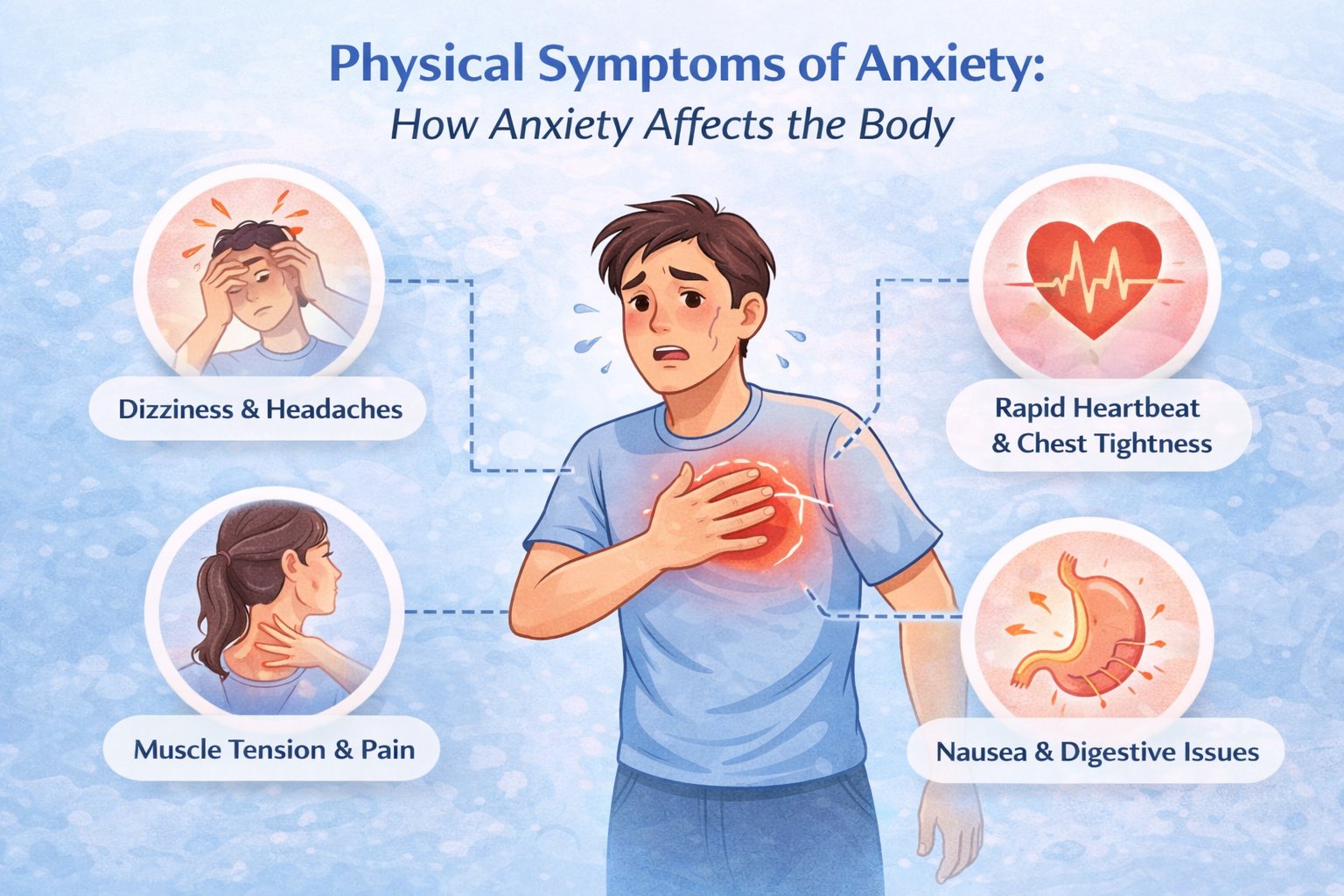
Understanding How Anxiety Affects the Body
Anxiety(opens in a new tab) is often thought of as a mental or emotional condition, but its effects go far beyond thoughts and feelings. It can trigger a wide range of physical symptoms that impact daily life, sometimes making individuals feel as though something is seriously wrong with their health.
The reason for this lies in the body’s natural stress response. When anxiety is activated, the nervous system prepares the body to respond to perceived danger. This reaction, often referred to as the “fight-or-flight” response, causes noticeable changes across multiple systems in the body.
For many individuals, these physical symptoms can be confusing or even alarming, especially when they appear without an obvious cause.
Why Anxiety Causes Physical Symptoms
Anxiety activates the autonomic nervous system, which controls involuntary functions such as heart rate, breathing, and digestion.
When the body perceives stress or threat, it releases stress hormones such as adrenaline and cortisol. These hormones prepare the body for action, even if no real danger exists.
This is why individuals may experience symptoms similar to those seen in serious medical conditions.
People often begin questioning why anxiety happens without a clear reason(opens in a new tab), especially when these physical sensations appear unexpectedly.
Common Physical Symptoms of Anxiety
Anxiety can affect nearly every part of the body. The symptoms may vary from person to person and can range from mild discomfort to intense distress.
Cardiovascular Symptoms
rapid or irregular heartbeat
chest tightness or discomfort
palpitations
These symptoms often lead individuals to worry about heart-related conditions. In some cases, they may resemble what people experience during an anxiety or panic attack(opens in a new tab).
Respiratory Symptoms
shortness of breath
rapid breathing
feeling unable to take a deep breath
These symptoms can intensify anxiety, creating a cycle where breathing changes increase distress.
Muscle and Body Tension
tightness in the neck and shoulders
jaw clenching
body aches or stiffness
Chronic muscle tension is a common physical effect of ongoing stress and anxiety.
Digestive Symptoms
nausea
stomach discomfort
changes in appetite
The digestive system is highly sensitive to stress, which is why anxiety often affects the gut.
Neurological Symptoms
dizziness or lightheadedness
tingling sensations
headaches
These symptoms may feel unfamiliar or concerning, especially when they occur suddenly.
Fatigue and Sleep Issues
constant tiredness
difficulty falling asleep
restless or poor-quality sleep
Individuals experiencing persistent symptoms may also notice patterns similar to high-functioning anxiety(opens in a new tab), where physical strain exists despite outward normal functioning.
How Anxiety Symptoms Can Feel in Real Life
For many individuals, physical symptoms of anxiety can feel overwhelming and difficult to explain.
Some describe it as a constant sense of tension in the body, while others experience sudden episodes of intense discomfort.
Understanding what anxiety feels like(opens in a new tab) can help individuals recognize these patterns and reduce fear associated with unfamiliar sensations.
Physical Symptoms vs Medical Conditions
One of the most challenging aspects of anxiety is that its physical symptoms can closely resemble serious medical conditions.
For example:
chest pain may resemble heart problems
shortness of breath may feel like a respiratory issue
dizziness may be mistaken for neurological concerns
This overlap often leads individuals to seek emergency care or repeated medical evaluations.
While it is important to rule out medical causes, recurring symptoms without a clear diagnosis may point toward anxiety-related conditions.
The Cycle of Anxiety and Physical Symptoms
Anxiety symptoms often create a cycle that reinforces itself.
Step 1: Physical Sensation
The body experiences a symptom such as a racing heart.
Step 2: Interpretation
The individual may interpret this sensation as dangerous.
Step 3: Increased Anxiety
This fear increases anxiety levels.
Step 4: Intensified Symptoms
The body responds with even stronger physical reactions.
This cycle can make symptoms feel more intense and persistent over time.
When Do Physical Symptoms Indicate Anxiety?
Physical symptoms may be related to anxiety if they:
occur during stressful situations
appear suddenly without a clear medical cause
improve with relaxation or calming techniques
are accompanied by worry or fear
In many cases, individuals may experience symptoms before they even recognize they are feeling anxious.
How to Manage Physical Symptoms of Anxiety
Managing physical symptoms involves addressing both the body and the mind.
Breathing Techniques
Slow, controlled breathing can help regulate the nervous system and reduce symptoms such as rapid heart rate and shortness of breath.
Many individuals use anxiety relief techniques(opens in a new tab) to manage symptoms in the moment.
Physical Activity
Exercise can help release built-up tension and reduce stress hormone levels.
Relaxation Strategies
meditation
progressive muscle relaxation
mindfulness practices
Professional Treatment
For persistent symptoms, structured care may be beneficial.
Many individuals explore anxiety treatment options(opens in a new tab), including therapy, medication, and lifestyle interventions.
When to Seek Professional Help
It is important to seek medical or behavioral health evaluation if:
symptoms are severe or worsening
daily activities are affected
there is uncertainty about the cause
symptoms feel overwhelming or uncontrollable
Healthcare providers can help determine whether symptoms are related to anxiety or another medical condition.
Individuals may also benefit from understanding behavioral health services for anxiety(opens in a new tab) and how structured care supports recovery.
Book an Appointment(opens in a new tab)
Frequently Asked Questions
Can anxiety really cause physical symptoms?
Yes, anxiety can trigger real physical symptoms through the body’s stress response, affecting the heart, muscles, digestion, and more.
Why does anxiety feel like a physical illness?
Anxiety activates the nervous system and releases stress hormones, which can create sensations similar to medical conditions.
How long do physical anxiety symptoms last?
The duration varies. Some symptoms last minutes, while others may persist for longer periods depending on stress levels and triggers.
Can anxiety cause chest pain?
Yes, anxiety can cause chest tightness or discomfort, but it is important to rule out heart-related conditions if symptoms are new or severe.
When should I see a doctor for anxiety symptoms?
You should seek evaluation if symptoms are severe, persistent, or interfere with daily life.
