Key Takeaways
• High-functioning anxiety allows individuals to appear successful while internally struggling with stress and worry.
• Common signs include overthinking, perfectionism, restlessness, and difficulty relaxing.
• Physical symptoms such as fatigue, muscle tension, and sleep disturbances are common.
• Many individuals do not recognize their symptoms as anxiety due to outward productivity.
• Early recognition and proper care can prevent long-term emotional and physical strain.
• Professional support can help manage symptoms and improve overall well-being.
Book an Appointment(opens in a new tab)
Understanding High-Functioning Anxiety
Anxiety(opens in a new tab) is often associated with visible distress, avoidance, or difficulty managing daily responsibilities. However, not all anxiety presents in obvious ways.
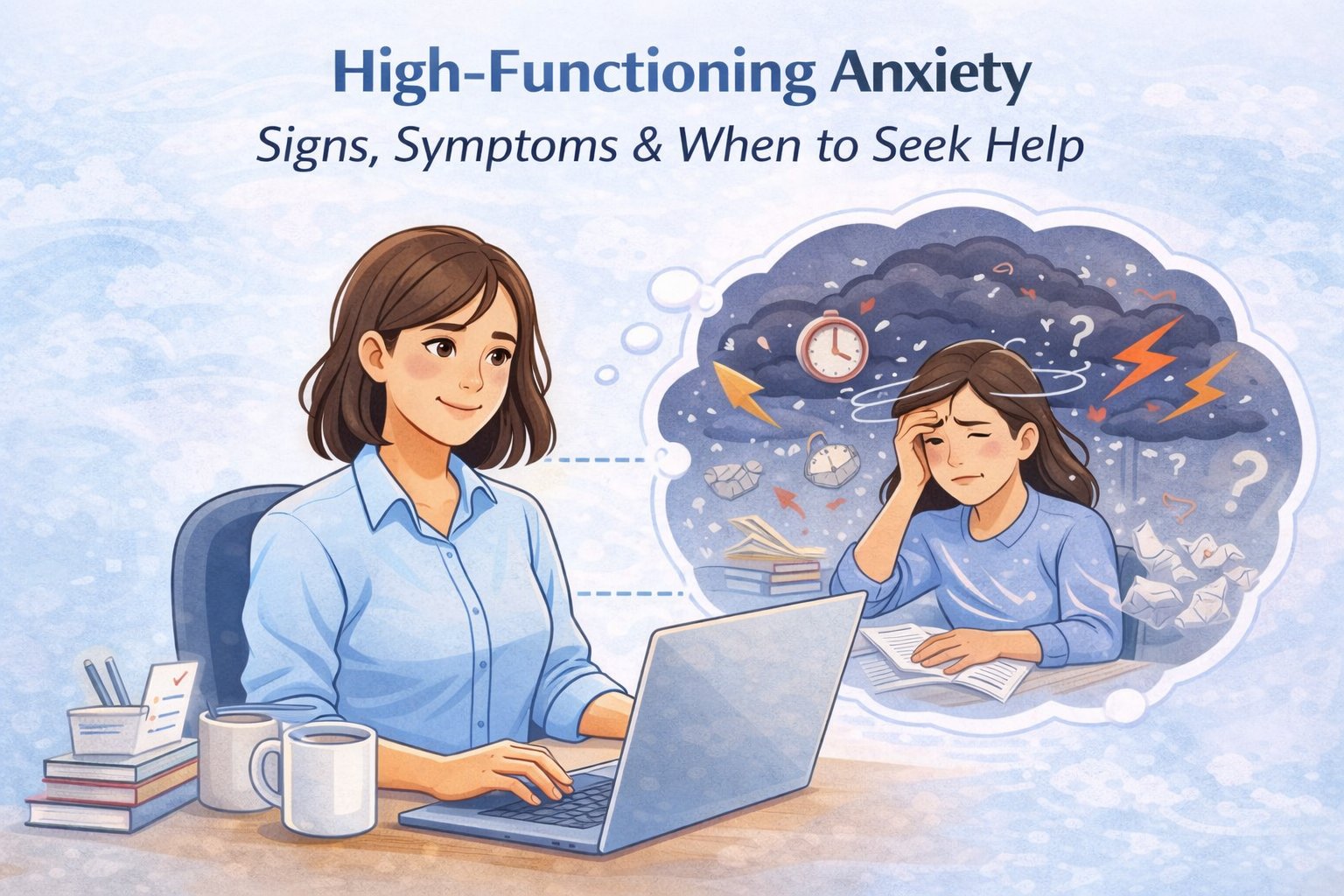
High-functioning anxiety is a pattern where individuals continue to perform well in their personal and professional lives while internally experiencing persistent worry, pressure, and emotional strain.
From the outside, everything may seem under control. Internally, however, the experience can feel overwhelming and exhausting.
What Is High-Functioning Anxiety?
High-functioning anxiety is not always a formal diagnosis, but it describes a recognizable pattern of behavior and experience.
Individuals with this form of anxiety often appear:
organized and driven
high-achieving and productive
reliable and detail-oriented
At the same time, they may struggle with internal challenges such as constant worry, fear of failure, and difficulty relaxing.
Many people begin recognizing these patterns when exploring what anxiety feels like(opens in a new tab) beyond surface-level stress.
Common Signs of High-Functioning Anxiety
High-functioning anxiety can be difficult to identify because many of its traits are often viewed as strengths.
Constant Overthinking
Individuals may spend significant time analyzing situations, replaying conversations, or anticipating potential outcomes.
Perfectionism
setting extremely high standards
fear of making mistakes
difficulty feeling satisfied with results
Need for Control
A strong desire to plan and control outcomes may stem from underlying anxiety about uncertainty.
Difficulty Relaxing
Even during downtime, individuals may feel restless or guilty for not being productive.
People-Pleasing Behavior
Many individuals prioritize others’ expectations to avoid conflict or disappointment.
These patterns may overlap with experiences described in hidden anxiety triggers(opens in a new tab), where underlying causes are not always immediately clear.
Physical Symptoms of High-Functioning Anxiety
Even when outward behavior appears controlled, the body often reflects ongoing stress.
muscle tension
fatigue despite adequate rest
headaches
digestive discomfort
sleep disturbances
These symptoms are commonly explained in more detail when exploring how anxiety affects the body(opens in a new tab).
Over time, persistent physical stress can contribute to burnout and reduced overall health.
Why High-Functioning Anxiety Often Goes Unnoticed
One of the biggest challenges with high-functioning anxiety is that it often goes unrecognized.
Because individuals continue to meet responsibilities and achieve goals, their struggles may not be taken seriously—by others or even by themselves.
Common reasons include:
success masking internal distress
belief that anxiety is “normal” or necessary
fear of appearing weak or incapable
This can delay seeking support, even when symptoms are affecting quality of life.
High-Functioning Anxiety vs General Anxiety
While high-functioning anxiety shares many similarities with general anxiety, the key difference lies in outward behavior.
High-Functioning Anxiety
maintains productivity
appears in control externally
internalizes stress
General Anxiety
may interfere with daily tasks
more visible symptoms
difficulty managing responsibilities
In some cases, symptoms may escalate into episodes similar to an anxiety or panic attack(opens in a new tab).
The Hidden Cost of High-Functioning Anxiety
While productivity may remain high, the long-term impact of untreated anxiety can be significant.
Potential effects include:
chronic stress and burnout
difficulty maintaining relationships
reduced emotional well-being
physical health complications
Over time, the pressure to maintain performance while managing internal distress can become overwhelming.
How to Manage High-Functioning Anxiety
Managing high-functioning anxiety involves recognizing patterns and adopting strategies to reduce stress and improve balance.
Set Realistic Expectations
Reducing perfectionism can help ease internal pressure.
Practice Mindfulness
Being present in the moment can help reduce overthinking and worry.
Prioritize Rest and Recovery
Allowing time for rest is essential for both mental and physical health.
Use Anxiety Relief Techniques
Many individuals benefit from techniques to calm anxiety(opens in a new tab) that can be applied in daily life.
When to Seek Professional Help
Even if daily responsibilities are being met, it is important to seek support when anxiety becomes overwhelming or persistent.
Consider seeking care if:
stress feels constant or unmanageable
sleep or physical health is affected
you feel emotionally exhausted
symptoms interfere with quality of life
Many individuals explore anxiety treatment options(opens in a new tab) to better understand available care approaches.
Structured support through behavioral health services(opens in a new tab) can help individuals manage symptoms and build healthier coping strategies.
Book an Appointment(opens in a new tab)
Frequently Asked Questions
What is high-functioning anxiety?
High-functioning anxiety refers to individuals who manage daily responsibilities successfully while internally experiencing anxiety and stress.
Is high-functioning anxiety a real condition?
While not always a formal diagnosis, it describes a common pattern of anxiety that affects many individuals.
What are the signs of high-functioning anxiety?
Common signs include overthinking, perfectionism, restlessness, and difficulty relaxing despite outward success.
Can high-functioning anxiety affect physical health?
Yes, it can lead to symptoms such as fatigue, muscle tension, headaches, and sleep disturbances.
When should I seek help for high-functioning anxiety?
You should seek support if anxiety feels overwhelming, persistent, or begins affecting your well-being.
