Key Takeaways
• Anxiety can be managed in the moment using simple, evidence-based techniques.
• Breathing exercises and grounding techniques are effective for immediate relief.
• Physical movement and sensory awareness help regulate the nervous system.
• Identifying triggers can reduce recurring anxiety episodes.
• Consistent coping strategies improve long-term emotional resilience.
• Professional support can help if anxiety becomes persistent or overwhelming.
Book an Appointment(opens in a new tab)
Understanding How to Calm Anxiety
Anxiety(opens in a new tab) can feel overwhelming, especially when it appears suddenly or without a clear cause. In these moments, knowing how to calm your mind and body can make a significant difference.
While anxiety is a natural response to stress, intense or frequent episodes may interfere with daily life. Learning immediate relief techniques can help regain a sense of control.
Many individuals first recognize the need for coping strategies when understanding how anxiety feels(opens in a new tab) in both the body and mind.
Why Immediate Anxiety Relief Matters
When anxiety spikes, the body enters a heightened state often referred to as the “fight-or-flight” response.
This response can cause:
rapid heart rate
shortness of breath
muscle tension
racing thoughts
These physical symptoms are explained further in how anxiety affects the body(opens in a new tab).
Immediate techniques help interrupt this response and bring the nervous system back to a calmer state.
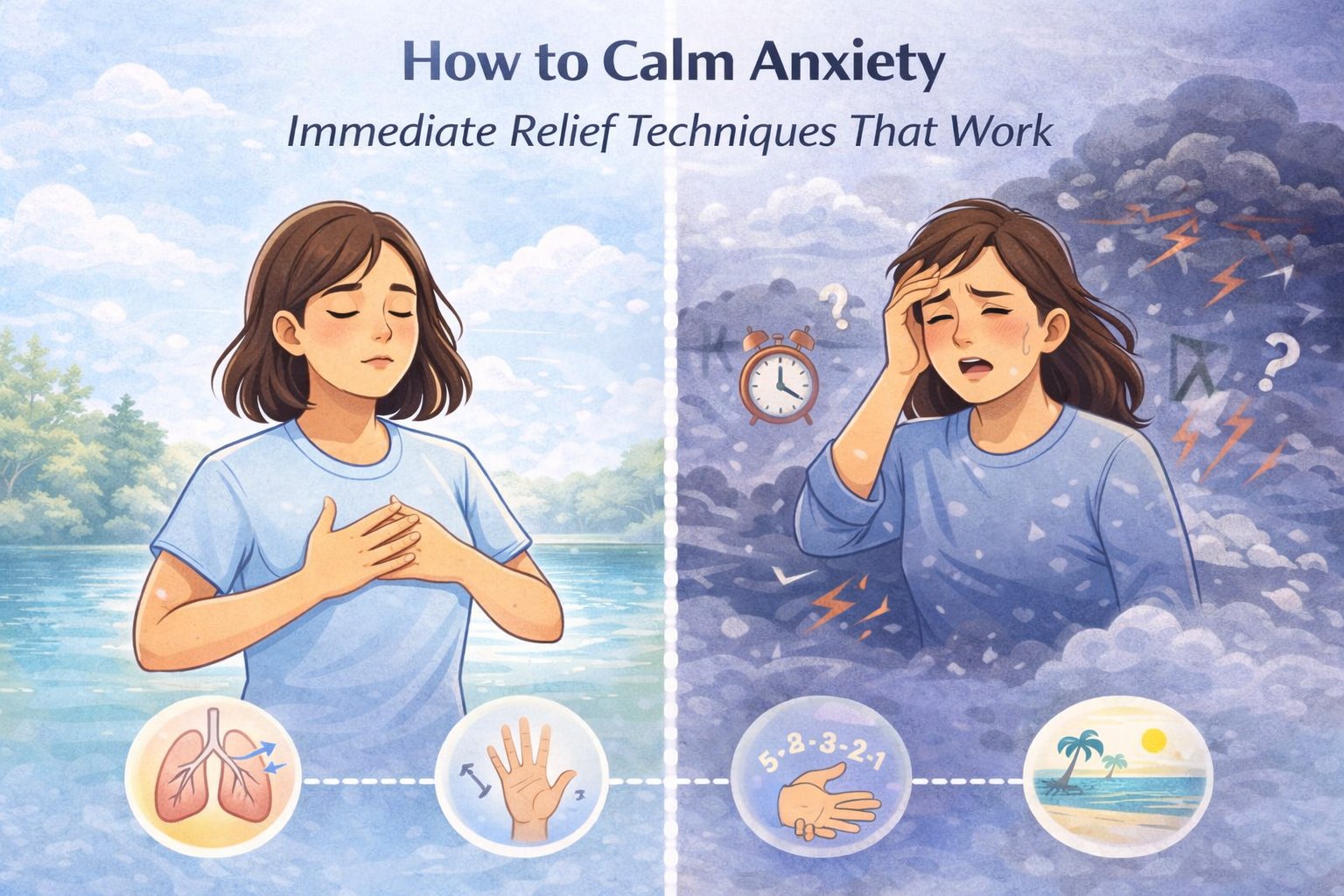
Breathing Techniques to Calm Anxiety
Controlled breathing is one of the fastest ways to reduce anxiety.
Deep Breathing
inhale slowly through your nose
hold for a few seconds
exhale slowly through your mouth
This helps regulate oxygen flow and reduce physical tension.
4-7-8 Breathing Method
inhale for 4 seconds
hold for 7 seconds
exhale for 8 seconds
This technique is especially helpful during intense episodes similar to an anxiety or panic attack(opens in a new tab).
Grounding Techniques for Immediate Relief
Grounding helps bring attention away from anxious thoughts and back to the present moment.
5-4-3-2-1 Method
5 things you can see
4 things you can touch
3 things you can hear
2 things you can smell
1 thing you can taste
This method engages the senses and reduces mental overwhelm.
Object Focus Technique
Choose an object nearby and focus on its details—color, texture, and shape—to redirect attention.
Physical Techniques to Reduce Anxiety
The body plays a key role in managing anxiety.
Light Movement
walking
stretching
gentle exercise
Movement helps release built-up tension and improves circulation.
Progressive Muscle Relaxation
This involves tightening and relaxing different muscle groups to reduce physical stress.
Many individuals begin identifying patterns when exploring hidden anxiety triggers(opens in a new tab) that contribute to these responses.
Mental Techniques to Calm the Mind
Anxiety often involves repetitive or negative thought patterns.
Reframing Thoughts
Challenge anxious thoughts by asking:
Is this thought realistic?
What evidence supports it?
Visualization
Imagine a calming environment such as a beach, forest, or quiet room.
Limit Overthinking
Recognizing patterns seen in high-functioning anxiety(opens in a new tab) can help interrupt cycles of over-analysis.
Quick Daily Habits That Reduce Anxiety
Incorporating small habits into your routine can prevent anxiety from escalating.
maintaining a regular sleep schedule
staying physically active
reducing caffeine intake
practicing mindfulness regularly
These habits support long-term emotional balance and resilience.
When Anxiety Becomes Overwhelming
While self-help techniques are effective, some situations require professional support.
Consider seeking help if:
anxiety occurs frequently
symptoms interfere with daily life
you experience panic attacks
coping strategies are not effective
Many individuals explore treatment options for anxiety(opens in a new tab) to better understand available support.
Professional care through behavioral health services(opens in a new tab) can provide structured guidance and long-term strategies.
Book an Appointment(opens in a new tab)
Frequently Asked Questions
What is the fastest way to calm anxiety?
Deep breathing and grounding techniques are among the fastest ways to reduce anxiety symptoms.
Do breathing exercises really help anxiety?
Yes, controlled breathing helps regulate the nervous system and reduce physical stress responses.
What are grounding techniques?
Grounding techniques help focus attention on the present moment using the senses.
Can anxiety go away on its own?
Mild anxiety may improve, but persistent anxiety often benefits from structured support.
When should I seek help for anxiety?
You should seek help if anxiety is frequent, intense, or affects your daily life.