Key Takeaways
• Anxiety can be treated through therapy, medication, and lifestyle changes.
• Cognitive Behavioral Therapy (CBT) is one of the most effective treatments for anxiety disorders.
• Medications may help regulate brain chemistry and reduce symptoms.
• Lifestyle changes such as sleep, exercise, and stress management play a critical role.
• Treatment plans are personalized based on symptoms and severity.
• Early treatment can significantly improve long-term mental health outcomes.
Book an Appointment(opens in a new tab)
Understanding Anxiety Treatment Options
Anxiety(opens in a new tab) is a highly treatable condition, and many individuals experience significant improvement with the right combination of care.
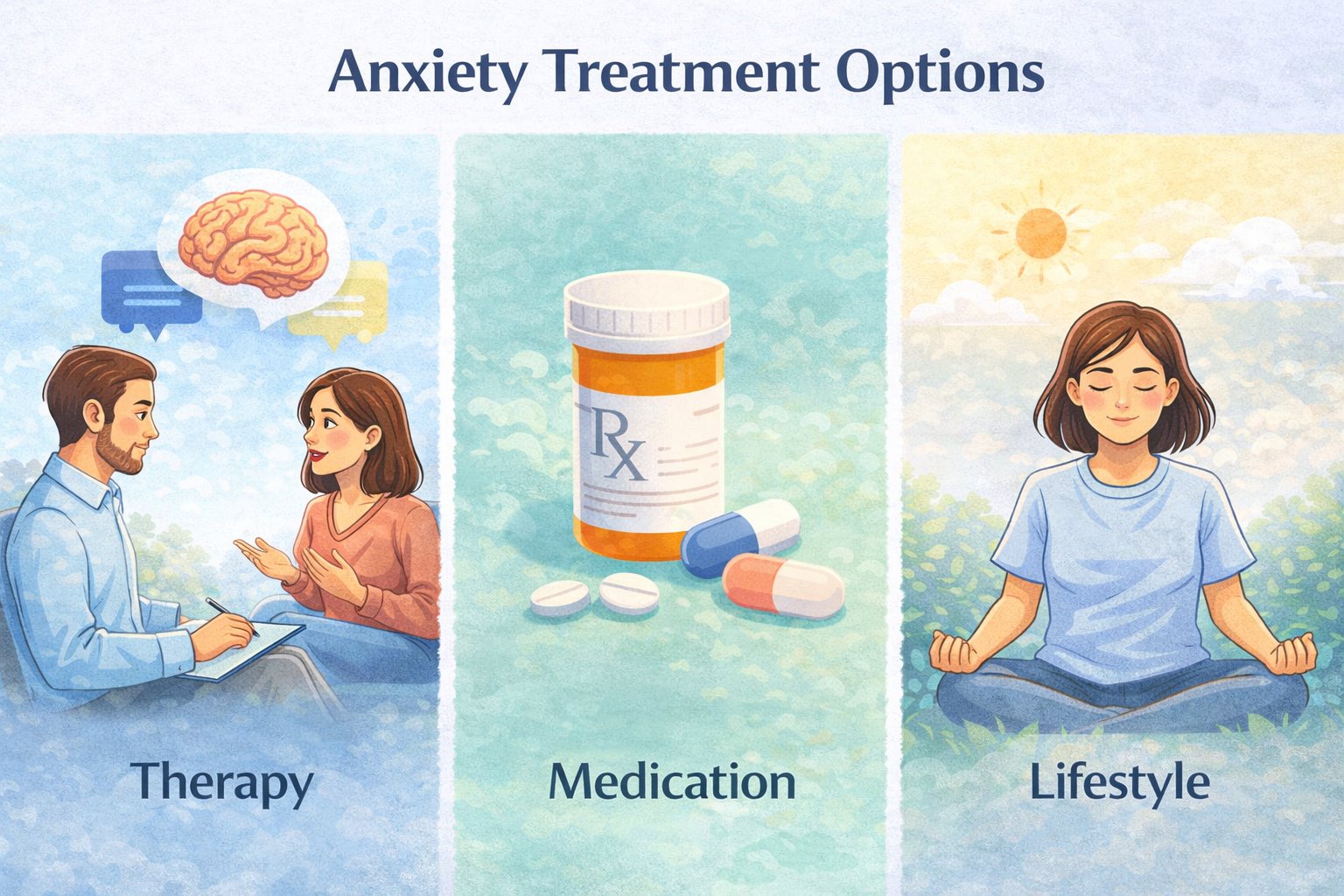
Treatment focuses on reducing symptoms, improving coping mechanisms, and addressing underlying causes. The most effective approach often includes a combination of therapy, medication, and lifestyle adjustments.
Many individuals begin exploring treatment after understanding how anxiety feels(opens in a new tab) and how it impacts daily life.
Types of Anxiety Treatment Approaches
Anxiety treatment typically falls into three main categories:
psychological therapies
medications
lifestyle and behavioral changes
Each approach targets different aspects of anxiety and can be used individually or together.
Therapy for Anxiety
Therapy is often the first-line treatment for anxiety disorders.
Cognitive Behavioral Therapy (CBT)
CBT helps individuals identify and change negative thought patterns that contribute to anxiety.
recognizing distorted thinking
developing healthier responses
gradual exposure to fears
This approach is widely used for managing symptoms similar to those seen in anxiety and panic attacks(opens in a new tab).
Talk Therapy
Also known as psychotherapy, this involves discussing thoughts, emotions, and experiences with a trained professional.
Exposure Therapy
This approach gradually exposes individuals to anxiety triggers in a controlled and safe environment.
Therapy can be especially helpful for individuals experiencing patterns seen in high-functioning anxiety(opens in a new tab).
Medications for Anxiety
In some cases, medication may be recommended to help manage symptoms.
Common Types of Medications
antidepressants (SSRIs, SNRIs)
anti-anxiety medications
beta-blockers for physical symptoms
These medications work by balancing brain chemicals that influence mood and stress response.
Medication is often used alongside therapy for a more comprehensive treatment plan.
Lifestyle Changes That Support Anxiety Treatment
Lifestyle adjustments play a crucial role in managing anxiety.
Sleep and Recovery
Poor sleep can worsen anxiety symptoms. Maintaining a consistent sleep schedule helps regulate mood.
Physical Activity
Regular exercise helps reduce stress hormones and improve mental clarity.
Nutrition
balanced diet
limiting caffeine
staying hydrated
Stress Management
Techniques such as anxiety relief techniques(opens in a new tab) can help manage daily stress.
Understanding triggers discussed in hidden causes of anxiety(opens in a new tab) can also guide lifestyle changes.
Personalized Treatment Plans
No single treatment works for everyone. Anxiety care is tailored based on:
type and severity of symptoms
underlying causes
medical history
individual preferences
A personalized approach ensures more effective and sustainable results.
When to Seek Professional Help
While mild anxiety can be managed independently, professional care is recommended when symptoms persist.
Consider seeking help if:
anxiety interferes with daily activities
symptoms worsen over time
panic attacks occur
self-help strategies are not effective
Understanding when to seek help for anxiety(opens in a new tab) is an important step in recovery.
Comprehensive care through behavioral health services(opens in a new tab) provides structured support and long-term management strategies.
Book an Appointment(opens in a new tab)
Frequently Asked Questions
What is the best treatment for anxiety?
The best treatment often includes a combination of therapy, medication, and lifestyle changes.
Can anxiety be treated without medication?
Yes, many individuals manage anxiety effectively through therapy and lifestyle changes alone.
How long does anxiety treatment take?
Treatment duration varies depending on severity, but many individuals see improvement within weeks to months.
Is therapy effective for anxiety?
Yes, therapies like CBT are highly effective in managing anxiety symptoms.
When should I consider medication for anxiety?
Medication may be considered when symptoms are severe or not improving with therapy alone.
