Key Takeaways
• Anxiety can occur without an obvious reason due to internal and external triggers.
• Brain chemistry, stress, and past experiences often play a role.
• Hidden triggers such as sleep issues, caffeine, and lifestyle habits can contribute.
• Physical symptoms may appear even when no clear cause is identified.
• Understanding underlying causes helps manage anxiety more effectively.
• Treatment options include therapy, lifestyle changes, and medical support.
Book an Appointment(opens in a new tab)
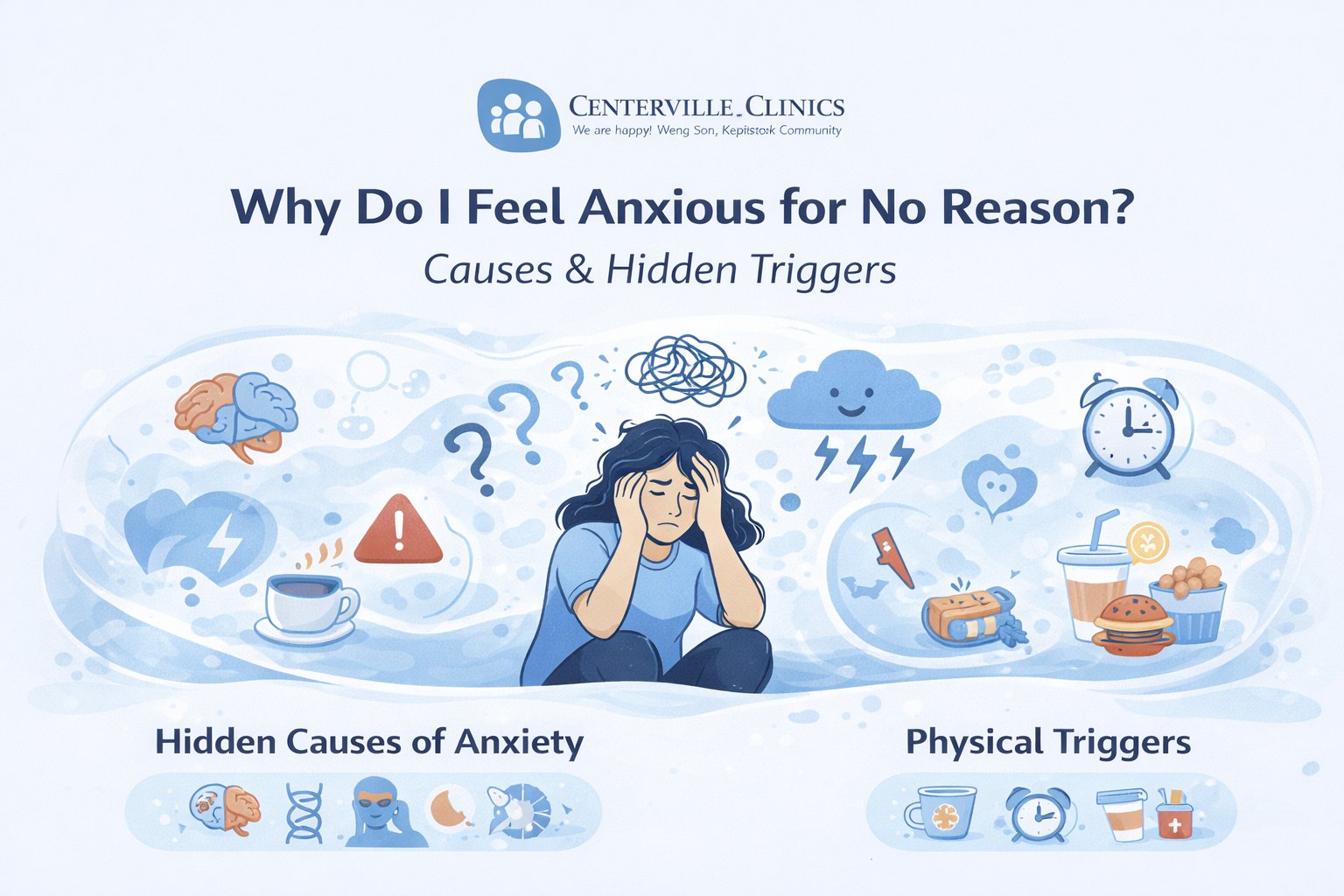
Why Anxiety Can Happen Without a Clear Reason
Anxiety(opens in a new tab) does not always have an obvious trigger. Many people experience sudden feelings of worry, fear, or unease without knowing why it is happening.
This can be confusing and frustrating, especially when there is no identifiable situation causing the stress. However, anxiety is often driven by underlying biological, psychological, and environmental factors.
Understanding these hidden influences can help individuals better manage symptoms and regain a sense of control.
Common Hidden Causes of Anxiety
Even when anxiety feels random, there are often underlying factors contributing to it.
1. Brain Chemistry Imbalances
Neurotransmitters such as serotonin and dopamine help regulate mood. When these chemicals are imbalanced, anxiety symptoms can occur without an obvious external trigger.
2. Chronic Stress
Ongoing stress from work, relationships, or daily responsibilities can build up over time and eventually manifest as anxiety.
3. Past Experiences
Previous traumatic or stressful experiences can influence how the brain responds to situations, even if the connection is not immediately clear.
4. Genetic Factors
Anxiety disorders can run in families, meaning some individuals may be more predisposed to experiencing anxiety.
Physical Triggers You May Not Realize
Many people overlook physical factors that can contribute to anxiety.
lack of sleep
excess caffeine intake
poor nutrition
hormonal changes
underlying medical conditions
These factors can activate the body’s stress response, leading to symptoms similar to those explained in physical symptoms of anxiety(opens in a new tab).
Emotional and Psychological Triggers
Internal emotional states can also trigger anxiety without a clear external cause.
overthinking or rumination
fear of uncertainty
perfectionism
low self-esteem
These internal patterns can create persistent anxiety even when everything appears normal externally.
Is It Normal to Feel Anxious for No Reason?
Occasional anxiety without a clear cause is common and part of the body’s natural response system.
However, when it becomes frequent, intense, or disruptive, it may indicate an underlying anxiety disorder.
Understanding how anxiety feels(opens in a new tab) can help differentiate between normal stress and a more serious condition.
When Anxiety Becomes a Concern
Anxiety should be evaluated when it starts affecting daily life.
persistent worry without relief
difficulty concentrating
sleep disturbances
physical discomfort or fatigue
In such cases, professional evaluation may be necessary.
Connection Between Anxiety and Panic Attacks
Sometimes unexplained anxiety can escalate into sudden intense episodes.
Understanding the difference between anxiety attacks and panic attacks(opens in a new tab) helps identify the severity and type of symptoms.
How to Manage Anxiety Without a Clear Cause
Even when triggers are unclear, there are effective ways to manage anxiety.
Daily Management Strategies
maintain a consistent sleep schedule
limit caffeine and stimulants
practice mindfulness or meditation
stay physically active
Many individuals benefit from learning immediate anxiety relief techniques(opens in a new tab).
Treatment Options for Persistent Anxiety
If anxiety continues without a clear cause, structured treatment can help.
cognitive behavioral therapy (CBT)
medication when needed
lifestyle modifications
stress management techniques
Explore anxiety treatment options(opens in a new tab) and professional behavioral health services(opens in a new tab) for long-term support.
When to Seek Professional Help
You should consider seeking care if:
anxiety feels constant or overwhelming
symptoms interfere with daily activities
self-help strategies are not effective
physical symptoms become severe
Book an Appointment(opens in a new tab)
Frequently Asked Questions
Why do I feel anxious for no reason?
Anxiety can be caused by internal factors such as brain chemistry, stress, or lifestyle habits even without a clear external trigger.
Can anxiety happen randomly?
Yes, anxiety can feel random but is often influenced by hidden physical or psychological factors.
Is unexplained anxiety serious?
It can be if it becomes persistent or interferes with daily life, in which case evaluation is recommended.
How can I reduce anxiety naturally?
Lifestyle changes such as better sleep, exercise, and stress management can help reduce anxiety symptoms.
When should I see a doctor for anxiety?
You should seek help if anxiety is frequent, severe, or affecting your quality of life.
